Let’s Celebrate Our Hospice Volunteers!

National Volunteer Appreciation Week April 18th- April 22nd!
April 18th-22nd is National Volunteer Appreciation week and Pemi-Baker Hospice & Home Health (PBH&HH) would like to recognize and say thank you to their 20+ hospice volunteers. Their volunteers come from a variety of professional backgrounds and represent many of the 29 towns PBH&HH serves.
The spirit of hospice volunteering is borne from a genuine desire to give comfort, peace and care to patients, caregivers and their families during end of life. Many volunteers have had a personal experience with someone who has benefited from all that hospice offers and have a strong desire to give back to other families in their community.
Hospice volunteers help in a variety of ways: holding vigil, writing letters, reading to patients, light housekeeping, relieving family caregivers, helping with outside chores, grocery shopping, dog walking and holding meaningful conversations. No amount of time is too small; some volunteers give 1-2 hours per week, some give 1-2 hours per month. “We are always looking for wonderful people who have a passion for working with others. Our volunteers are so important to our non-profit organization and to those families we serve,” said Shannon Cassidy, Hospice Volunteer Coordinator for PBH&HH.
All hospice volunteers complete a free 5-week training course via Zoom with Shannon and other members of the hospice team. The course covers the hospice philosophy, listening and communication skills, confidentiality, family dynamics, and bereavement support for clients and their families.
Next Training: Tuesdays, 2pm-4pm, May 3rd-May 31st
For more information about hospice training and to register, please contact Shannon Cassidy, BSW, Hospice Volunteer Coordinator at 603-536-2232 or by email at info@pbhha.org.

Spring Grief & Loss Support Groups Starting April 26th!

Pemi-Baker Hospice & Home Health (PBH&HH) would like to welcome you to their FREE grief support groups being held on Tuesday mornings, 11-12:30pm, at the Plymouth Regional Senior Center. There is also a Zoom only group that meets later in the day from 5:30-7pm. Anyone who has lost a loved one is welcome. Topics include the stress of grief, tips for coping during the holidays and what helps when grief hurts.
Pre-registration is required for this 6 week session and the in-person, Tuesday morning meetings require a mask.  Please call Guy Tillson, Hospice Chaplain at 603-536-2232 or email him at info@pbhha.org to register or learn more. We hope you will join us and find strength with others walking a similar path.
Tuesdays, April 26th-May 31st: 11am-12:30pm or 5:30pm-7pm
With over 55 years of experience, serving clients from 29 towns in central and northern New Hampshire, Pemi-Baker Hospice & Home Health is committed to creating healthier communities. Services include at-home healthcare (VNA), hospice and palliative care, and Community Programs including: American Red Cross CPR/AED/FA, Caregiver Support Groups and Grief and Bereavement Support Groups. Providing compassionate care with experienced staff who are trained, certified professionals in the business because of their hearts.
In your time of need, we’re right where you need us.
PBH&HH Celebrates Social Work Month in March
Pemi-Baker Hospice & Home Health is helping celebrate this year’s Social Work Month in March with the theme “The Time is Right for Social Work” to highlight how social workers have enriched our society for more than a century and how their services continue to be needed today.
The annual Social Work Month campaign is a time to inform public, policymakers, and legislators about the services social workers provide in an array of sectors, including hospitals, mental health centers, schools, social service agencies, community centers and home health care.
People become social workers because they have a strong desire to help others and make our society a better place to live for all. Social work is one of the fastest growing professions in the United States, according to the Bureau of Labor Statistics (BLS). There are almost 720,000 professional social workers in our nation, but that number is expected to rise to more than 800,000 by 2030, BLS said.
Throughout U.S. History, social workers have:
- Fought for client privacy and mental health services
- Fought for civil and voting rights for people of color
- Achieved the minimum wage and safer workplaces for poor people
- Expanded reproductive and employment rights for American women
- Raised awareness about HIV/AIDS prevention and treatment
- Supported marriage and employment protections for LGBT people
- And much more!
Social workers touch millions of lives each day and it is likely a social worker at some time will assist you, a family member, or a friend. For example, are you a student who needs athletic shoes to participate in sports, but your parents can’t afford to buy them? Talk to your school social worker. They can help you find the resources you need. Do you want a better relationship with your spouse, partner, children, or parents? A social worker can help you forge stronger connections. Are you living with depression, anxiety, or a substance use disorder? A social worker can help you overcome them and thrive.
Pemi-Baker’s social workers continue to work on the frontlines throughout the pandemic, helping clients get the health care they need and helping loved ones overcome grief and loss. We would like to say a huge thank you to our social workers, Lauren Bell, BSW and Shannon Cassidy, BSW who work tirelessly day in and day out to help our clients and client’s families connect with the services they need. During Social Work Month we urge you to learn more about their amazing profession, thank the social workers in your lives, and help support the profession.
Currently, Pemi-Baker Hospice & Home Health is hiring for a part time home health and hospice social worker position. Call for details or visit our page on Indeed.
With over 55 years of experience, serving clients from 29 towns in central and northern New Hampshire, Pemi-Baker Hospice & Home Health is committed to creating healthier communities. Services include at-home healthcare (VNA), hospice and palliative care, and Community Programs including: American Red Cross CPR/AED/FA, Caregiver Support Groups and Grief and Bereavement Support Groups. Providing compassionate care with experienced staff who are trained, certified professionals in the business because of their hearts. In your time of need, we’re right where you need us.
Pemi-Baker is located at 101 Boulder Point Drive, Suite 3, Plymouth, NH. To contact us please call: 603-536-2232 or email: info@pbhha.org Like our Facebook Page: @pemibakerhospicehomehealth
~written by Anna Swanson
Celebrate Caregivers!
What would we do without caregivers? Not everyone is cut out to be a caregiver. It takes a special person to dedicate their time and energy to help another.  Caregivers provide help with daily essentials along with the physical and emotional support needed by our loved ones late in life. But do we ever stop to take care of the caregiver? How often do we say “thank you” for being there for our loved ones, our clients, and the most defenseless in society? When do we take the time to ask how the caregiver is doing? Care-giving can be a gratifying experience but can also cause a great deal of stress. While caring for and focusing on another, a caregiver can neglect their own health, causing harm over time. Therefore, it is essential to provide tools and resources to help manage stress. If a caregiver doesn’t care for themselves, they can’t care for someone else.
One way we can help is to spend a day honoring caregivers. On the third Friday of February, we can celebrate a group of people who selflessly provide support to our aging loved ones with patience and kindness. The Providers Association for Home Health & Hospice Agencies, PAHHHA, started National Caregiver Day in 2015 to recognize a profession that gives so much and often goes unappreciated. Caregivers spend time taking care of the essential needs of our vulnerable family members. A caregiver is anyone who provides help to another person in need and can be a family caregiver or a professional caregiver. According to the Mayo Clinic, 1 in 3 adults in the United States provides care as an informal caregiver to another adult.
 Make sure you take time on February 18th to honor the people who care for our most vulnerable population. For example, you could give cards with encouraging words of appreciation or a small gift to show gratitude. You can also honor caregivers on social media using the hashtag #nationalcaregiversday and let people know what makes them special. Here are some suggestions for a small gift to the caregivers in your life:
- Spa Gift Card
- Scented hand lotion or Candles
- Baked Goods
- Take them to lunch
You don’t have to spend a lot of money to show appreciation. Caregivers make a difference in the lives of others every single day so let’s take one day & make a difference in their lives. Pemi-Baker Hospice & Home Health offers FREE Caregiver support groups the first Wednesday of each month from 10-11:30am via Zoom. You will be able to connect with others, learn more about tools and resources to cope with the natural ebb and flow of your emotions and discuss any issues related to the monthly topic. Contact Guy Tillson to register at info@pbhha.org or call 603-536-2232.
With over 55 years of experience, serving clients from 29 towns in central and northern New Hampshire, Pemi-Baker Hospice & Home Health is committed to creating healthier communities. Services include at-home healthcare (VNA), hospice and palliative care, and Community Programs including: American Red Cross CPR/AED/FA, Caregiver Support Groups and Grief and Bereavement Support Groups. Providing compassionate care with experienced staff who are trained, certified professionals in the business because of their hearts. In your time of need, we’re right where you need us.
Pemi-Baker is located at 101 Boulder Point Drive, Suite 3, Plymouth, NH. To contact us please call: 603-536-2232 or email: info@pbhha.org Like our Facebook Page: @pemibakerhospicehomehealth
Preventing Falls in the Home
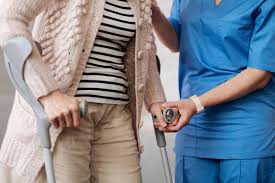
Falls have been a leading cause of injury for older Americans for decades, and the data on this problem is startling. As a Physical Therapist with Pemi-Baker Hospice & Home Health for nearly 12 years now, I can attest to the number of home health patients we treat annually due to a fall. Research compiled by the CDC finds:
- In 2018, approximately 36 million falls occurred among people aged 65 and over in the US, and of that number, there were roughly 8 million injuries.(1)
- One out of every 5 falls among older adults causes a serious injury, such as a broken bone or a head injury.
- In fact, falls are the most common cause for traumatic brain injuries (TBI).
- If you are curious about the cost of all this falling to the healthcare system, annually it totals close to 50 billion dollars for non-fatal falls, and another 750 million dollars for fatal falls.
- NH actually has a higher than average rate of deaths due to falling, with a rate of 109 deaths per 100,000 falls annually. The national average is 66-68 deaths per 100,000 falls.
 The WHO has reported that people over the age of 75 tend to fall more frequently in their homes, while those younger than age 75 seem to fall outside more often. Prior surveys found that around 30% of falls in the home happened in the living room, while another 30% were occurring in the bedroom. 19% of falls from this data set took place in the bathroom.
As for the reasons why people fall, there are numerous contributing causes. Many times, a person who falls will have several issues that weigh in against them. The evidence shows the likelihood of falls can be influenced by many factors including:
- A prior fall. This is often the single strongest predictor of further falls.
- Weakness of the leg or hip muscles. This can contribute to poor balance and slower reaction times, making it harder to stop a fall if a person stumbles or bumps into something
- Poor vision, which also influences balance
- Use of medications such as sedatives, some pain killers, or anti- depressants. Some of these may cause drowsiness or slower reactions.
- Joint pain, especially in the feet, ankles, knees or hips.
- Trip/slip hazards in the home such as clutter, objects lying in hallways, poor lighting, high thresholds, liquid spilled onto floors.
Fortunately, there are some effective options available to help reduce the chances of falling. The CDC has published a manual titled “A CDC Compendium of Effective Fall Interventions”. The first item they go over is exercise. Studies have repeatedly shown that specially designed exercises aimed at weak muscles and poor balance can be effective for many people in reducing falls.
The second item in the CDC Compendium effective for reducing falls was modification to the living environment. This might consist of things like making sure there is adequate lighting, getting rid of broken down old footwear, installing color contrasting tape on stairs, or getting a shower chair and hand-held shower attachment in place.
For over 55 years, Pemi-Baker Hospice & Home Health has been providing services exactly as I have described above, to people in Grafton County, right in their homes. Our agency has highly trained, caring Occupational and Physical Therapists who can bring their expertise to your home and give you the right guidance on what you should do to reduce your chances of a fall. We can create custom home exercise programs and recommend practical, effective ways to modify your living environment for better safety. While our outpatient OT and PT service has now transitioned to operating thru the Mid-State Health Center, Pemi-Baker Hospice & Home Health continues to provide top quality in-home OT, PT, and Nursing care. For more details, call or check our website www.pbhha.org.
References:
With over 55 years of experience, serving clients from 29 towns in central and northern New Hampshire, Pemi-Baker Hospice & Home Health is committed to creating healthier communities. Services include at-home healthcare (VNA), hospice and palliative care, and Community Programs including: American Red Cross CPR/AED/FA, Caregiver Support Groups and Grief and Bereavement Support Groups. Providing compassionate care with experienced staff who are trained, certified professionals in the business because of their hearts. In your time of need, we’re right where you need us.
Pemi-Baker is located at 101 Boulder Point Drive, Suite 3, Plymouth, NH. To contact us please call: 603-536-2232 or email: info@pbhha.org Like our Facebook Page: @pemibakerhospicehomehealth
~written by Ernest Roy PT DPT, Quality Director PBH&HH
Reap the Rewards of Volunteering!
Join Pemi-Baker Hospice & Home Health’s Team of Hospice Volunteers.
Hospice volunteers know that helping others at the end of their lives is tremendously rewarding. Being part of a hospice team gives you the profound privilege of bringing comfort, peace and care to patients, caregivers, and their families during their transitional journey. Volunteers feel a greater appreciation of life itself, a deeper understanding of what’s truly important, and an authentic sense of fulfillment.
Why volunteer?
As a hospice volunteer, you become part of a person’s life when you are needed most. That sense of fulfillment is priceless. Also, without caring volunteers like you, there would be no Medicare-certified hospice programs. Medicare law requires that 5% of hospice care hours are provided by volunteers.
Who volunteers?
People just like you.  Adults, young adults, and in some cases mature teens from all backgrounds, experiences, and cultures. Effective hospice volunteers embrace the fact that their role is one of compassionate service.
What skills do I need?
Most agencies like Pemi-Baker Hospice & Home Health, will provide the training and orientation you need to feel confident and comfortable with whatever level of support you choose to give. Training can include things such as grief counseling, boundaries between the volunteer, the patient and the family, and emergency medical support.
Do you love music? Sharing stories? Playing cards? Whatever passions, talents, or interests you bring can also be valuable assets. The most precious asset, of course, is simply caring.
What does a hospice volunteer do?
Ultimately, hospice care is about providing patients, caregivers, and families with the most comfortable and compassionate end-of-life experience possible. Your responsibilities will vary. In many cases it’s as simple as companionship. Sitting and talking. Or just listening. Or playing a patient’s favorite music.
You may also assist patients with tasks they can no longer perform for themselves. It may include anything from light household chores to lending emotional support to the patient’s family during this difficult time.
If you prefer to work in a different capacity, some hospice providers have opportunities to help with administrative office tasks.
What is the time commitment?
As with most things around hospice volunteering, your commitment can vary. It depends a lot on the time you’re willing to commit and the needs of the patients you are matched with. Some volunteers work an hour a week, some 2 hours each month.
I’m interested; how do I pre-register?
The next FREE VIRTUAL Hospice Volunteer training will start Tuesday, February 8th and run 5 weeks through March 8th. All the training is done via two hour zoom meetings in the comfort of your own home. Contact Shannon Cassidy, Pemi-Baker Hospice & Home Health’s Hospice Volunteer Coordinator at 603-536-2232 or email her at scassidy@pbhha.org. For more information visit Pemi-Baker Hospice & Home Health’s Events Calendar.
With over 50 years of experience, serving clients from 29 towns in central and northern New Hampshire, Pemi-Baker Hospice & Home Health is committed to creating healthier communities. Services include at-home healthcare (VNA), hospice and palliative care, and Community Programs including: American Red Cross CPR/AED/FA, Caregiver Support Groups and Grief and Bereavement Support Groups. Providing compassionate care with experienced staff who are trained, certified professionals in the business because of their hearts. In your time of need, we’re right where you need us.
Pemi-Baker is located at 101 Boulder Point Drive, Suite 3, Plymouth, NH. To contact us please call: 603-536-2232 or email: info@pbhha.org Like our Facebook Page: @Pemibakerhospicehomehealth
written by Anna Swanson
Loss & Grief: Some basics in processing personal grief
Pemi-Baker Hospice & Home Health is offering a FREE grief and loss support series starting Tuesday, February 15th running through March 29th, 2022. Late morning and early evening times will accommodate all schedules and we invite anyone experiencing a personal loss to join us.
Since Elizabeth Kubler-Ross’ pioneering work On Death and Dying in 1969, research and study on the very human experiences of grief and loss have come a very long way. The “five stages of grief” entered quickly into the storehouse of wisdom in the popular culture. Many people can tick off “Denial, anger, bargaining, depression, and acceptance” when asked about the process of grieving. As helpful as these categories can be in opening up discussion, the truth is that “stage theory” has fallen on hard times in psychological studies.
Put simply, life experience is much too dynamic and deeply personal to fall into neat and progressive stages that follow one upon the other in predictable fashion. Kubler-Ross herself did not see her theory as being that way. It took our characteristically American linear way of thinking to do that. Generally speaking, we like things neat, but life is messy. Over the course of almost four decades, other theorists have included additional features in grieving, such as “shock”, “guilt”, “retreating”, “reflection”, “isolation”, and “working through”. There is a lot to consider if we are in the thick of trying to come to terms with a significant loss that has come into our life.
In a practical effort to begin to explore the intricate web of responses and reactions that human beings experience following upon significant life-losses, the Hospice program of Pemi-Baker Hospice & Home Health in Plymouth will be offering a series on “Loss and Grief: Some Basics” as part of its Bereavement services. The series consists of six sessions. Each session will include a brief educational presentation, a reflective exercise to assist participants in focusing on their experience of loss, and a time for sharing, questions, and discussion. Sessions will include such topics as: “My Concept of Loss”, “Evaluating My Loss”, “Coping Skills”, “Manifestations of Grief”, “What Helps and What Hurts?”, “Acceptance”, “My New Reality”, and “Recognizing My Strengths”.
The six week series will be offered on Tuesdays at two different times: a late morning group 11am-12:30pm or an evening group 5:30pm -7pm. In-person participation is limited to five people for each group; there will be hand sanitizer, socially-distanced seating and masks are required. Please pre-register with Guy Tillson, Bereavement Coordinator by email (gtillson@pbhha.org) or by phone (603-536-2232). Pre-registration required by Tuesday, February 8th, 2022. Ask about possible accommodations virtually via ZOOM.
With over 55 years of experience, serving clients from 29 towns in central and northern New Hampshire, Pemi-Baker Hospice & Home Health is committed to creating healthier communities. Services include at-home healthcare (VNA), hospice and palliative care, and Community Programs including: American Red Cross CPR/AED/FA, Caregiver Support Groups and Grief and Bereavement Support Groups. Providing compassionate care with experienced staff who are trained, certified professionals in the business because of their hearts. In your time of need, we’re right where you need us.
Pemi-Baker is located at 101 Boulder Point Drive, Suite 3, Plymouth, NH. To contact us please call: 603-536-2232 or email: info@pbhha.org Like our Facebook Page: @PBCH4
Why We Love National Home Health & Hospice Month

National Home Care and Hospice Month in November is when we honor all professionals who work in the broad field of home care and hospice work – this includes physicians, nurses, LNAs, social workers, physical therapists, and so many more. Each requires a different skill-set and comes with its own emotional and physical demands. The professionals who perform these services are committed to helping patients live, as well as pass away with dignity. This month is for them.
- Home Health Care Can Reduce Falls and Hospital Re-admissions
If you have had surgery or been hospitalized for a medical illness, you might have safety concerns at home, particularly the risk of falls. The truth is that falls with resulting injuries are quite common in hospitals, despite efforts to reduce them. There is a growing body of evidence to suggest that an elderly or ill person is less likely to suffer a serious event at home compared to an acute care setting. Home care can also reduce the rate of hospital re-admission.
- Home Health Care Provides a Medical Level of Care at Home
After hospitalization, most people prefer to heal at home. Similarly, the elderly prefer to stay home rather than go to a skilled nursing facility.

Home health care can provide a variety of benefits to support activities of daily living as well as 24/7 nursing care, disease management, ostomy and catheter management, surgical after care/wound care, medication management and care for high risk pregnancies, infants and children.
If the only thing keeping a patient in the hospital is the need for intravenous medications, there is good news: there is now a way to manage infusion therapy at home.
- Home Health Care Can Provide Physical Therapy and Occupational Therapy
If you’ve had surgery and you’ll be needing physical or occupational therapy, you don’t have to go to a rehabilitation facility. Pemi-Baker Hospice & Home Health offer at-home therapy services.  Another benefit that at-home therapy provides, is the opportunity to assess the safety and accessibility of the home environment. A therapist’s trained eyes can spot fall hazards or bathroom dangers and provide helpful preventive advice.
- Hospice Provides Dignity for Many
Home care and hospice workers believe that those at the end of their lives deserve the right to pass peacefully and on their own terms. The elderly often far prefer to stay in the comfort of their homes, where they feel freer and are at less risk of contracting other illnesses. The existence of hospice makes this level of freedom available to many who otherwise would not have had it. Hospice care offers 24/7 clinical support, medication and pain management, assistance with daily living activities, medical supplies and equipment, volunteer support and companionship, social, spiritual and grief support from social workers and chaplains, for the whole family.
- Hospice Month Gives us a Chance to Improve Caregivers’ Lives
These family members and/or professionals dedicate physical, emotional, and mental energy to each one of the individuals in their care, and often deal with the emotional fallout when the terminally ill take a turn for the worst or pass away. Pemi-Baker offers advice and support in the home to the families they are caring for and also offers a Caregiver Support group every first Wednesday of the month at 10:00am in person or via ZOOM.
- Hospice Proves the Healing Power of the Home and Loved Ones
 The elderly who wish to retain the freedom of staying in their home and ending their lives on their own terms experience true psychological benefits. Their comfortable surroundings allow them to end their lives with a sense of dignity, which is incredibly valuable. In fact, home care harkens back to older days, when tending to the terminally ill at home was the standard. There’s always the added benefit of being closer to their loved ones in their final days.
If you think you or your loved one would benefit from home health care, palliative care or hospice care we urge you to visit our website to learn more or call to speak directly to a professional who will guide you.
With over 50 years of experience, serving clients from 28 towns in central and northern New Hampshire, Pemi-Baker Hospice & Home Health is committed to creating healthier communities. Services include at-home healthcare (VNA), hospice and palliative care, and Community Programs including: American Red Cross CPR/AED/FA, Caregiver Support Groups and Grief and Bereavement Support Groups. Providing compassionate care with experienced staff who are trained, certified professionals in the business because of their hearts. In your time of need, we’re right where you need us.
Pemi-Baker is located at 101 Boulder Point Drive, Suite 3, Plymouth, NH. To contact us please call: 603-536-2232 or email: info@pbhha.org Like our Facebook Page: @PBCH4
~written by Anna Swanson
Pemi-Baker Community Health and Mid-State Health Center Collaboration
Pemi-Baker Community Health and Mid-State Health Center are excited to announce a new collaboration to enhance access to services in the community.

Pemi-Baker Community Health Changing Name to Pemi-Baker Hospice and Home Health
For fifty-five years, Pemi-Baker Community Health has followed their mission to improve the health and wellbeing of the communities they serve by providing excellence in health care services in your home and at their facility at 101 Boulder Point Drive in Plymouth. With more than 70 employees and volunteers, they have grown to meet the needs of 28 surrounding towns, and as their new name and logo show, they are focusing on Hospice, Palliative and Home Health Care moving forward.
Pemi-Baker Hospice & Home Health is pleased to announce that their outpatient physical therapy (PT) and occupational therapy (OT) services will now be overseen by Mid-State Health starting January 1st, 2022. Pemi-Baker will maintain their offices at Boulder Point with a new entrance and will be serving patients as far north as Benton, Lincoln, Franconia, Sugar Hill, Bethlehem and Littleton. Their Doctors, Nurses, LNA’s, Chaplains, Social Workers, Physical, Occupational and Speech Therapists will continue to provide excellent services in the home setting. They are also pleased their current Senior Director of Home Health, Palliative Care, & Hospice, Danielle Paquette-Horne RN, is taking the position of Executive Director.
“With the growing need for hospice and home health in central and northern New Hampshire, this transition will allow us to focus our resources and expand our services to the patients and families who are in need of professional home healthcare,” said Danielle Paquette-Horne.
Mid-State Health Center launches Outpatient Physical and Occupational Therapy as a new service.
Starting January 1, 2022, Mid-State will begin offering physical and occupational therapy services under its umbrella of primary care services. Through a collaboration with Pemi-Baker Hospice and Home Health, Pemi-Baker’s trusted and skilled Outpatient Physical and Occupational Therapy team will be joining Mid-State Health Center to provide PT/OT services. This transition will further enhance Mid-State’s integrated approach to health care while providing individuals in need of physical and occupational therapy with the same high-quality care, provided by the same team, in the same familiar space.
Dr. Robert MacLeod, Mid-State CEO says, “We are committed to providing health care services that meet the needs of the whole person. Bringing PT/OT services under our umbrella is another step for Mid-State to strengthen our integrated care model, while allowing Pemi-Baker to deliver services to patients where they need it most in the home care setting.”
The two organizations will be working closely over the upcoming months to ensure a seamless transition for all. To learn more about this transition, please visit midstatehealth.org/OPT.