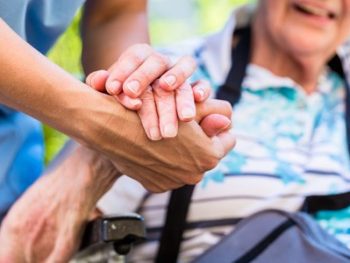
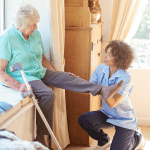
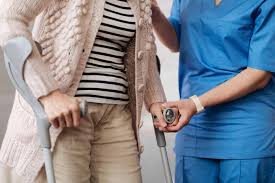
Each year, more and more persons enter the ranks of family caregivers who are spouses, relatives, adult children, close friends, or neighbors providing unpaid care for a loved one who is elderly, enduring a chronic illness, or living with a physical or mental disability.
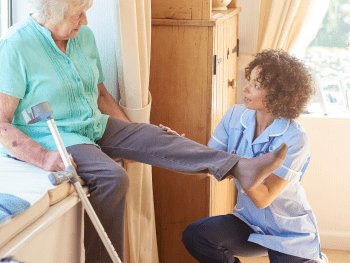
Family caregivers prepare meals, attend to household chores, provide transportation, administer medications, assist with personal hygiene, and offer emotional support. The caregiver can offer comfort and familiarity to the needful person, but the activity can create physical strain and emotional burnout for the caregiver.
Recent statistics from the American Association of Retired Persons (AARP), the John A. Hartford Foundation, the Center to Advance Palliative Care, the Center for Disease Control, and the Family Care Alliance report some astounding figures. Here in the United States about sixty-three million adults are performing the duties of family caregivers. A quarter of these are doing this full-time. About a third have been at the work for five years or more. Almost seventy-five percent are women. Seventy percent of those who are under age sixty-five are still employed. Half of these report the caregiving impacts their job performance and attendance in some way. Sixty-four percent state that they experience high emotional stress. Twenty percent of caregivers describe their combined physical and emotional health ranges from poor to only fair. Caregivers’ fatigue is clearly an emerging public health problem.
To contribute some small relief to caregivers’ stress, Pemi-Baker Hospice & Home Health offers a monthly support group for family caregivers. The group provides a safe space for caregivers to share their challenges, to listen to other caregivers, and to exchange strategies and resources in managing their responsibilities. The group meets on the first Wednesday of every month at the Boulder Point offices of the agency. There is no cost to participate or attend. The group session begins at 10:00am and concludes by 11:30am. If you are interested, please pe-register by contacting Guy Tillson, Hospice Chaplain, at 603 536-2232 or at gtillson@pbhha.org. Our next gathering will be on Wednesday, November 4, 2026.


 Caregiver burnout is a common phenomenon among those who care for individuals with dementia, and it can lead to serious physical and mental health issues. Pemi-Baker Hospice & Home Health is committed to supporting caregivers and promoting their well-being. We offer the following tips to help caregivers avoid burnout when caring for someone with dementia:


 Air-conditioning is important when it is hot and humid outside. If you do not have air-conditioning in your home, go somewhere that does. A movie theater, the mall, a friend or family member’s home or a community senior center are all good options. You can contact your local Area Agency on Aging for help finding a local cooling center during extended periods of extreme heat.

 Signs to look for may include disorientation, dry skin, excessive tiredness, headache, lethargy, nausea, a flushed face, high body temperature, rapid pulse, dizziness and confusion. Take immediate action if you feel any symptoms coming on.
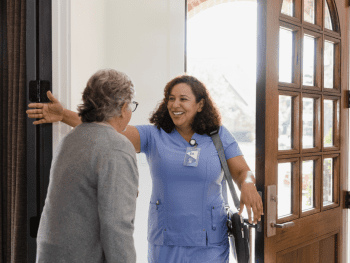
 Caregivers provide help with daily essentials along with the physical and emotional support needed by our loved ones late in life. But do we ever stop to take care of the caregiver? How often do we say “thank you” for being there for our loved ones, our clients, and the most defenseless in society? When do we take the time to ask how the caregiver is doing? Care-giving can be a gratifying experience but can also cause a great deal of stress. While caring for and focusing on another, a caregiver can neglect their own health, causing harm over time. Therefore, it is essential to provide tools and resources to help manage stress. If a caregiver doesn’t care for themselves, they can’t care for someone else.
 Make sure you take time on February 18th to honor the people who care for our most vulnerable population. For example, you could give cards with encouraging words of appreciation or a small gift to show gratitude. You can also honor caregivers on social media using the hashtag #nationalcaregiversday and let people know what makes them special. Here are some suggestions for a small gift to the caregivers in your life: