We are at once happy and sad to announce the retirement of our CEO, Chandra Engelbert. She has been an outstanding leader for more than 12 years of dedicated service at Pemi-Baker Community Health and a true inspiration for all of us.
The entire Central NH/Plymouth community has benefitted from Chandra’s leadership for much longer than that though. Chandra began her career earning a B.S. in Nursing at Northeastern University in Boston, MA and her MBA from UNH’s Whittemore School of Business and Economics. Chandra’s professional expertise included: Nursing in Medical Surgery, Intensive Care Unit, Emergency Department, Recovery Room, Home care and Hospice. Profit and nonprofit administrative background included management of home care and hospice, Vice President of Diagnostic Services at LRGHealthcare and ICU/ED Manager at Weeks Medical Center in Lancaster, NH.
Over the years she served on the Home Care, Palliative Care and Hospice Alliance of NH and the Central New Hampshire Chamber of Commerce Boards, Central NH Health Partnership, Rural Healthcare Association, Plymouth State University Nursing Honor Society and Nursing Advisory Board and the Central Service Health Network; participating in emergency preparedness efforts and public health initiatives in NH. 
Creating a collaborative effort between PBCH, Mid-State Health Center and Speare Memorial Hospital is one of her most proud accomplishments and instilling the ‘Ubuntu’ philosophy for the employees of Pemi-Baker Community Health, creating a culture for them filled with respect, honesty and value.
She will be deeply missed but we can only feel happy for her after many years of service to our community and hope that she enjoys her well-deserved retirement.
~written by Anna Swanson


 Starting at the wrist of one hand, let your thumb and fingers of the other hand softly massage the wrist, and then move across the back of the hand, and continue to gently massage each knuckle and joint of each finger. As you finish, use your fingertips to move in a circle in your palm. Then attend to the other hand. You may also want to lightly rub your palms together or even to softly clap your hands. To massage your head, gently let your fingertips move through your hair (or what you have left of it!). Do this a few times. Then gently tap your fingertips throughout and across your whole scalp, not forgetting the areas around your ears or at the base of your skull down to your neck. This also stimulates the movement of energy in our cranial area.
 For the purpose of focusing and directing your attention, only one is necessary. Use it as the daylight is ending. Simply direct your attention to the light, bringing to mind thoughts of past good times and the joy of affection shared with loved ones. The length of time you do this for does not matter too much, but respect the rhythm of your ability to concentrate easily. This isn’t supposed to be a chore or an assignment! It seems to be more profitable to do this in a quiet time without the distraction of other noise. This can be settling to the soul and bring your day to a peaceful end.


 Denise is a registered dietitian through the Commission on Dietetics Registration, a board-certified diplomat in Lifestyle Medicine through the American College of Lifestyle Medicine and a preferred provider of Medical Nutrition Therapy (MNT). She is committed to building stronger, healthier individuals, families and communities through individual and group nutrition consultations, telehealth, corporate training workshops, wellness retreats, health, and lifestyle coaching, and speaking engagements.

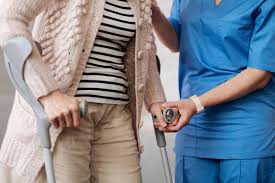
 certain activities that once seemed simple can become more difficult to manage.
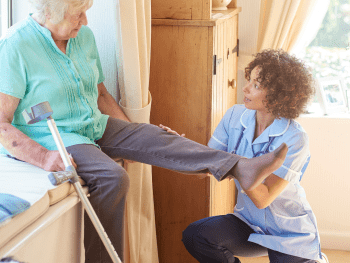
 nal and physical therapy when he gets home following knee surgery. The nurse can help your Mom learn to manage her medications safely and help her learn ways to manage her overall health more effectively. Occupational and physical therapy will provide training on the best exercises Dad can do to strengthen his knee so he can get back to doing the things he enjoys.
 How does a patient access skilled home health thru Pemi-Baker Community Health?