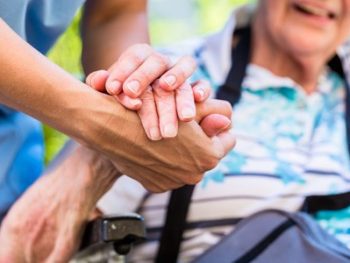
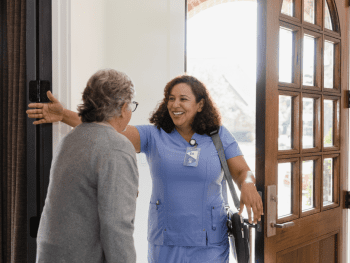
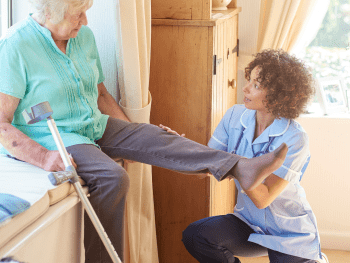
More and more, people prefer to be cared for in the comfort and dignity of their own homes. Pemi-Baker Hospice & Home Health provides in-home medical services that are cost-effective and person-centered. November is a chance to recognize the dedication and innovation of providers of health care at home. It is an opportunity to acknowledge recipients of in-home care services, and celebrate that they are able to remain in the safety and comfort of their own homes while receiving quality care.
Home health, hospice & palliative care providers have always been important to vulnerable citizens in our communities. But now that importance is underscored by the risk of exposure to COVID-19 in public/facility settings. When given the option, patients want to receive care in their homes. We believe that desire is stronger today than it has ever been. Pemi-Baker Hospice & Home Health is proud to support 29 communities in central and northern NH.

Home Health
Home Health provides skilled services, including nursing care, physical, occupational and speech therapy. Pemi-Baker will send a licensed professional to assess home health needs and develop a complete care plan. These services are usually short-term, as in the case of a person recovering from surgery or other health issues.
What are the costs and what is covered?
Medicare will cover home health if it is ordered by a physician and the person is homebound and in need of skilled services. Services are usually covered for a 30-day “episode of care.” However, if an individual is enrolled in a Medicare HMO, known as a Medicare Advantage Plan, services are authorized on a per-visit basis. Long-term care insurance and Medigap plans may also cover some costs of a home health aide.
Hospice Care
Hospice care brings together medical care, pain management and emotional and spiritual support for patients at the end of life and their families. The mission of hospice staff and volunteers is to address the symptoms of a terminal illness with the intent of promoting comfort and dignity. They are experts at pain management.
Hospice will manage your loved one’s pain, help you understand what he or she is going through and help you and other family members cope with your emotions. Many of us are at a loss as to what we should do before and at the time of death. Hospice professionals help you get through a very difficult time and are there even after your loved one’s death.
What are the costs and what is covered?
Medicare and Medicaid provide a hospice benefit that covers almost all of the costs of caring for a dying person during his or her last six months of life. To qualify for the Medicare hospice benefit, a person must have:
- Medicare Part A
- A life expectancy of less than six months
- An agreement in writing that he or she will not pursue any treatments to cure his or her illness
The Medicare hospice benefit covers skilled nursing services, physician visits, skilled therapy (i.e. physical, speech or occupational), medical social services, nutrition counseling and bereavement counseling, most of the cost of prescription drugs for symptom control and pain relief. Short-term inpatient respite care to relieve family members from care-giving is also covered.
“I am proud to celebrate our staff who work tirelessly to provide exceptional care to our most vulnerable community members and to provide the opportunity for people to remain in their homes as long as they can,” said Pemi-Baker’s Executive Director, Danielle Paquette-Horne, RN. “I encourage everyone to learn more about their options of care and share their wishes with their family, loved ones, and health care professionals.”
For more information about how you can benefit from home health or hospice care in the home, please contact Pemi-Baker Hospice & Home health at 603-536-2232 or www.pbhha.org.
Pemi-Baker Hospice & Home Health is a trusted, nonprofit agency proudly serving 29 towns in central and northern NH since 1967. Expert services include at-home healthcare and physical therapies (VNA), hospice and palliative care, and community programs including: American Red Cross CPR/AED/FA, Caregiver and Bereavement Support Groups and Ask A Pemi-Baker Nurse days at your local senior centers. Providing compassionate care with experienced staff who are trained, certified professionals and also your neighbors. In your time of need, we’re right where you need us.
~written by Anna Swanson
 The merry and festive atmosphere of the upcoming fall and winter holidays can pose a challenge to those who have endured significant losses. The losses do not have to be the deaths of loved ones. They can include such things as a divorce or the breakup of a relationship, being laid off from a job, relocation from a long-familiar setting to a brand-new place where all seems strange, the death of a pet, or the loss of physical health and powers due to a medical condition. In any case, one may not feel at all like celebrating even though it seems like everyone else does.


 Air-conditioning is important when it is hot and humid outside. If you do not have air-conditioning in your home, go somewhere that does. A movie theater, the mall, a friend or family member’s home or a community senior center are all good options. You can contact your local Area Agency on Aging for help finding a local cooling center during extended periods of extreme heat.
 Signs to look for may include disorientation, dry skin, excessive tiredness, headache, lethargy, nausea, a flushed face, high body temperature, rapid pulse, dizziness and confusion. Take immediate action if you feel any symptoms coming on.
 Some of the auction donations are specific to palliative and hospice services including: therapeutic massage, hospice and dementia comfort cubs, therapeutic music and hospice comfort kits.


 “We are always looking for wonderful people who have a passion for working with others. Our volunteers are so important to our non-profit organization and to those families we serve,” said Shannon Cassidy, Hospice Volunteer Coordinator for PBH&HH.